The journey from academic research to industrial application is often long and challenging. However, a breakthrough motor control technology developed at Istanbul Technical University's Photovoltaic Systems Laboratory (ITU PVLAB) has successfully bridged this gap, offering industry a field-proven, ready-to-deploy solution that could transform AC motor drive systems across multiple sectors.
A Decade of Research Yields Industrial-Grade Solution
The Sensorless Self-Commissioning and Motor Control Library represents more than ten years of dedicated research, development, and industrial validation. What sets this technology apart is its high Technology Readiness Level (TRL)—it's not a laboratory concept but a fully tested, implementation-ready software framework that has been proven in real-world industrial environments.
The library addresses one of the most persistent challenges in motor drive systems: the complex and time-consuming commissioning process. Traditional motor control systems typically require extensive manual parameter tuning, prior knowledge of motor specifications, external test equipment, and often mechanical rotor locking. This new technology eliminates all these requirements, enabling fully sensorless commissioning, tuning, and operation from the very first spin.
Comprehensive Motor Support and Turn-Key Implementation
The library provides turn-key motor control modules for a wide range of AC motors including:
- Permanent Magnet Synchronous Motors (PMSM)
- Interior Permanent Magnet Synchronous Motors (IPMSM)
- Synchronous Reluctance Motors (SynRM)
- Brushless DC Motors (BLDC)
- Induction Motors (IM)
PMSM
IPMSM
LSIPMSM
SynRM
BLDC
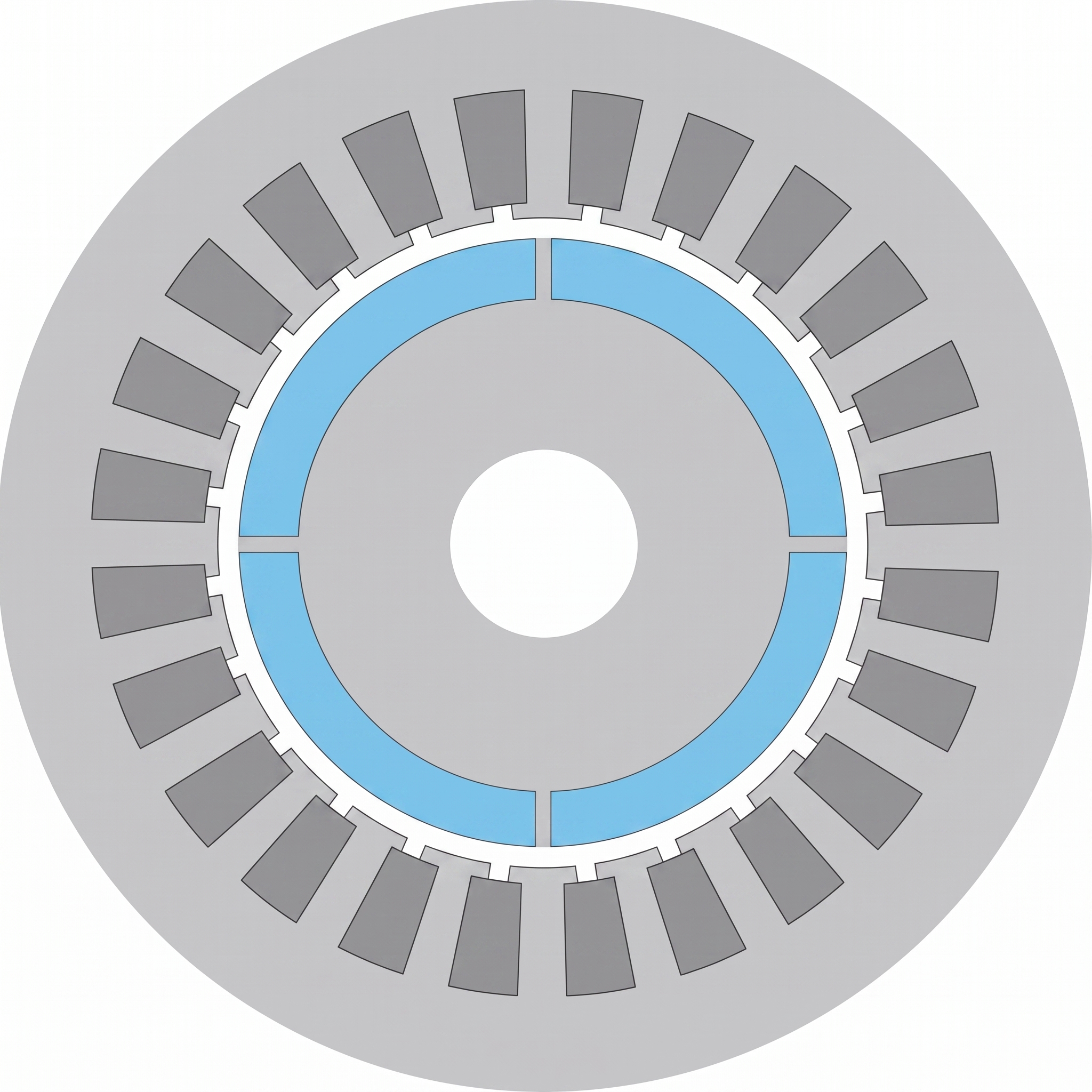
Induction Motor (IM)
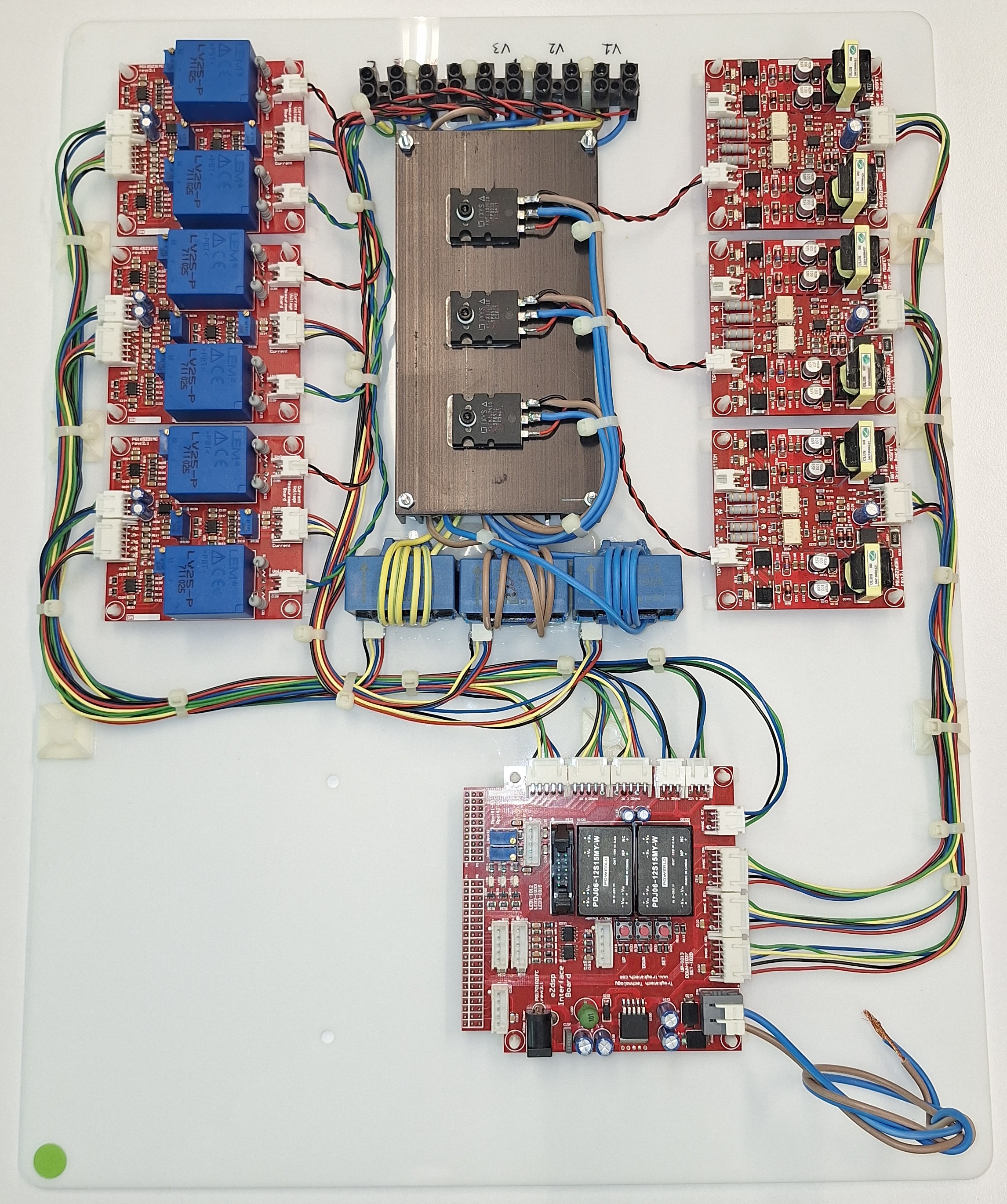
What makes this solution particularly attractive for industrial adoption is its plug-and-play nature. The package includes fully tested, implementation-ready C code specifically optimized for Texas Instruments Piccolo™ microcontrollers (TMS320F28069M, F28035, and F28335), along with a comprehensive technical guide PDF that covers both theoretical foundations and hands-on implementation steps.
The technology has been validated using Texas Instruments' TMDSHVMTRINSPIN high-voltage motor drive platform, ensuring compatibility with industry-standard hardware and facilitating rapid integration into existing systems.
Advanced Self-Commissioning Capabilities
The library's self-commissioning modules represent a significant advancement in motor control automation. The system performs a comprehensive suite of identification and calibration procedures automatically:
For Parameter Identification:
- Current controller auto-tuning and spatial inductance/leakage inductance mapping with respect to electrical angle
- Initial rotor position detection and magnet polarity detection using High-Frequency Signal Injection (IPMSM/SynRM)
- Stator resistance estimation with inverter nonlinearity compensation and dead-time compensation
- Ld/Lq inductance identification with 2D/3D saturation mapping (PMSM/BLDC/IPMSM/SynRM) or saturated leakage inductance estimation (IM)
- Magnetizing inductance curve identification including magnetic saturation effects (for induction motors)
- Rotor resistance and rotor leakage inductance identification using both stationary and rotational methods (for induction motors)
- Permanent magnet flux linkage identification (PMSM/BLDC/IPMSM/SynRM)
- System inertia estimation
For Operational Control:
- High-Frequency Signal Injection (HFSI) based low-speed operation for sensorless control
- Adaptive sensorless observers for low to high-speed operation (both PM and IM)
- Maximum Torque Per Ampere (MTPA) control for optimized efficiency
- Field-weakening control for extended speed range operation
Detailed Self-Commissioning Process Architecture
The self-commissioning library implements a comprehensive, automated approach to motor parameter identification and controller tuning. The process is organized into sequential steps that systematically eliminate the need for external measurement equipment or manual parameter entry.
Self-Commissioning Flowchart for PMSM/BLDC/IPMSM/SynRM Drives
For Permanent Magnet Synchronous Motors and their variants, the self-commissioning follows a carefully structured sequence:
- Current Controller Auto-Tuning and Spatial Inductance Mapping: Automatic identification of current controller parameters combined with spatial inductance mapping with respect to electrical angle to account for cogging torque and magnetic anisotropy effects
- Initial Rotor Position Detection and Magnet Polarity Detection (IPMSM/SynRM): For motors with magnetic saliency, automatic detection of initial rotor electrical position and magnet polarity using high-frequency signal injection techniques
- Stator Resistance Estimation and Inverter Nonlinearity Compensation: Precise stator resistance estimation with simultaneous identification of distortion voltage including dead-time compensation to account for inverter switching characteristics
- Saturated Inductance Identification (Ld and Lq): Comprehensive two-dimensional mapping of Ld(id) and Lq(iq) inductances with full consideration of magnetic saturation effects across the operating range
- Speed Controller Auto-Tuning and System Inertia Identification: Automatic speed control loop tuning with simultaneous identification of equivalent mechanical inertia
- Permanent-Magnet Flux Linkage Estimation: Accurate determination of the magnetic rotor flux linkage, essential for sensorless observer design and MTPA control implementation
Motor Configurations for PM Synchronous Drives
PMSM
IPMSM
LSIPMSM
SynRM
BLDC
Self-Commissioning Flowchart for Induction Machine (IM) Drives
For induction motors, the library provides an equally comprehensive but distinctly different identification sequence that accounts for the unique characteristics of AC induction machines:
- Current Controller Auto-Tuning and Spatial Leakage Inductance Mapping: Automatic current control parameter optimization combined with identification of spatial leakage inductance mapping vs. electrical angle for accurate flux representation
- Stator Resistance Estimation and Inverter Nonlinearity Compensation: Precise stator resistance estimation along with distortion voltage characterization including comprehensive dead-time compensation
- Saturated Leakage Inductance Identification: Non-linear estimation of leakage inductance vs. stator current demonstrating how leakage inductance varies with current saturation
- Magnetizing Curve Identification: Complete characterization of the magnetizing curve, stator flux vs. stator current, and inductance vs. stator current using both stationary and rotational test methods for comprehensive saturation mapping
- Rotor Resistance and Leakage Inductance Identification: Simultaneous determination of rotor resistance and rotor leakage inductance, critical parameters for rotor-flux-oriented control
- Speed Controller Auto-Tuning and System Inertia Identification: Speed control optimization with concurrent identification of the equivalent mechanical inertia
Induction Motor (IM) Configuration
Why Automated Parameter Identification is Essential
Parameter measurement cannot be left to the user for several critical reasons:
- Users may lack specialized knowledge of proper motor parameter measurement techniques
- Access to necessary professional testing equipment (impedance analyzers, dynamometers, etc.) is frequently unavailable
- Manual measurement is time-consuming, potentially introducing errors and delays in commissioning
- Incorrect parameter values can lead to control instability, reduced efficiency, and excessive component stress
Therefore, the self-commissioning library ensures that the motor drive automatically:
- Measures all motor parameters without external assistance (no clamps, pulleys, inertia loads, prime movers, or specialized test equipment required)
- Operates entirely in a sensorless manner (no torque sensor, position sensor, speed sensor, QEI, Hall effect, Resolver, or other external feedback)
- Requires only a minimum set of motor nameplate parameters and hardware specifications from the user
- Automatically designs and configures the necessary observer algorithms for sensorless operation
- Tunes all control loops (current and speed) completely automatically
The ITU PVLAB Foundation
The development of this motor control technology is rooted in the broader expertise of Istanbul Technical University's Photovoltaic Systems Laboratory. ITU PVLAB is a pioneering research facility specializing in renewable energy technologies and power electronics.
The laboratory's core mission extends beyond photovoltaic systems to encompass comprehensive power electronics research. Their work includes development and testing of control strategies, converter and inverter topologies for grid-connected and standalone renewable energy systems, and hybrid energy systems incorporating photovoltaics, fuel cells, supercapacitors, batteries, wind energy, and flywheels.
What distinguishes ITU PVLAB is its emphasis on practical, industry-ready solutions. The laboratory doesn't limit itself to modeling and simulation but actively engages in experimental prototype design, development, and testing. This hands-on approach encompasses DC-DC converters, inverters, battery charging systems, and solar water pumping systems—all tested according to international standards such as IEC and IEEE to ensure industry compliance and reliability.
The laboratory also pioneers research in reinforcement learning-based control strategies for power electronics applications in renewable energy systems. This includes developing adaptive and autonomous control algorithms for power converters, motor and generator drives, and battery and energy management systems using data-driven and model-independent approaches.
For electric vehicles and microgrid systems, ITU PVLAB conducts experimental and software developments focusing on power electronics drivers, intelligent energy management, and battery systems. Their advanced expertise includes implementing control algorithms with real-time embedded systems (DSP, FPGA, SoC), rapid control prototyping (RCP), hardware-in-the-loop (HIL) testing, and digital twin-supported verification infrastructure.
Flexible Demonstration and Validation Options
Understanding the importance of seeing technology in action before commitment, the developers offer multiple demonstration pathways. A demonstration video showcasing the complete self-commissioning workflow is available upon request. For organizations seeking a more hands-on evaluation, live demonstrations can be arranged either at the ITU laboratory facilities or at the client's location.
For on-site demonstrations, the requirements are minimal and practical. The only necessities are a Texas Instruments motor control kit (TMDSHVMTRPFCKIT or TMDSHVMTRINSPIN) equipped with a TMS320F28069M controlCARD, and a motor up to 1 kW at 240V. Due to airline restrictions on transporting high-voltage hardware, local availability of these standard industry kits is essential. Notably, no dynamometer setup is required, further simplifying the demonstration process.
Commercial Licensing and Support Framework
The primary commercialization pathway focuses on direct licensing to companies seeking to integrate these motor control modules into their AC motor drive or inverter platforms. The licensing model offers flexibility to accommodate different business needs:
Direct Module Access
Companies can license the complete module set or select specific modules relevant to their applications. All modules are delivered as implementation-ready embedded software, minimizing integration time and development risk.
Technical Support Services
Post-licensing technical support is available on an hourly or session basis. This optional service covers integration assistance, parameter tuning for specific applications, system adaptation to unique requirements, and optimization or debugging support. This pay-as-you-go model ensures companies receive expert assistance when needed without ongoing overhead costs.
Training Programs
Short-term training workshops can be arranged for engineering teams, available in both remote and on-site formats. These sessions accelerate internal capability development and ensure effective technology transfer.
Market Opportunities and Technology Transfer
This technology represents a significant opportunity for Technology Transfer Offices (TTOs) seeking high-value intellectual property with clear industrial applications. The motor control library addresses real pain points in industries ranging from industrial automation and HVAC systems to electric vehicles and renewable energy applications.
The field-proven nature of the technology significantly de-risks the adoption process for industrial partners. Rather than licensing an early-stage concept requiring substantial additional development, companies gain access to mature, tested software that can be integrated into products on accelerated timelines.
For industries increasingly focused on automation, energy efficiency, and simplified installation processes, a motor control solution that eliminates complex commissioning procedures while optimizing performance across diverse motor types offers compelling value propositions.
A Bridge Between Academic Excellence and Industrial Innovation
The Sensorless Self-Commissioning and Motor Control Library exemplifies successful translation of academic research into practical industrial technology. Developed within ITU PVLAB's comprehensive power electronics research environment and validated through rigorous testing, this technology stands ready for commercial deployment.
For companies developing motor drive systems, the opportunity to license a proven, comprehensive control solution could accelerate product development, reduce engineering costs, and deliver superior performance to end users. For Technology Transfer Offices, this represents the kind of mature, market-ready technology that facilitates successful academic-industry partnerships.
The comprehensive documentation available through Texas Instruments (technical guide and evaluation hardware) provides additional confidence in the technology's readiness and industry alignment.
As industries worldwide push toward greater automation, improved energy efficiency, and simplified installation processes, technologies that deliver on these fronts while maintaining robust performance become increasingly valuable. This motor control library, born from Istanbul Technical University's commitment to practical, industry-oriented research, offers a compelling answer to these market demands.
Interested in Licensing or Demonstrations?
For organizations interested in exploring licensing opportunities or arranging demonstrations, direct inquiries can be made through Istanbul Technical University's Photovoltaic Systems Laboratory.
Contact ITU PVLAB